Your website can have the sharpest messaging in your category and still lose the click. Not because the content missed the mark, but because the page took too long to load, jumped around while someone tried to tap a button or froze when they interacted with it.
Google notices all of that. And it has a name for the way it measures it: Core Web Vitals.
If you’ve seen that phrase in a Search Console report and quietly closed the tab, this one’s for you. Core Web Vitals sit at the intersection of technical SEO and website user experience, making them one of the few technical SEO improvements you can directly control. Here’s what they actually measure, how much they matter for Google rankings and where to focus first if your site isn’t keeping up.
Core Web Vitals are a set of web performance metrics Google uses to evaluate real-world user experience. Not how fast your site loads in a perfect lab environment. How it performs for actual visitors on actual devices, based on real Chrome user data.
There are three metrics, and each measures a part of the experience your visitors actually notice.
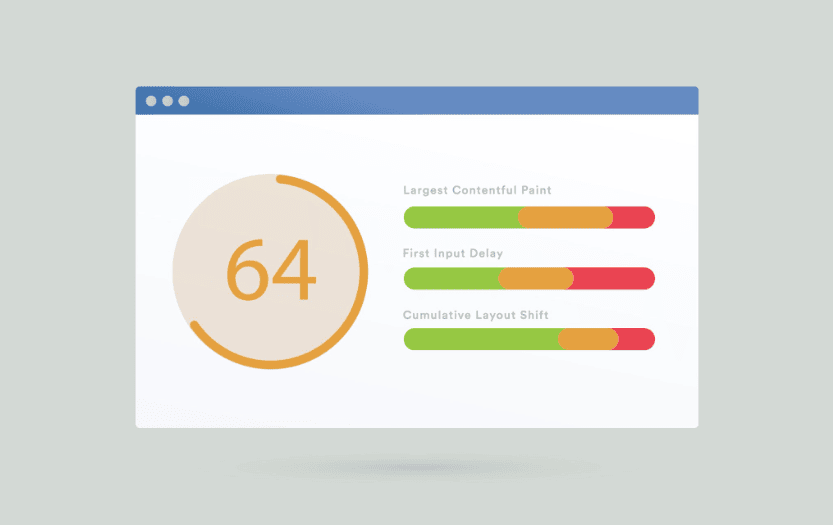
Largest Contentful Paint (LCP): How quickly the main content on your page becomes visible. Specifically, it measures how long it takes for the largest visible element on the page, usually your hero image or headline, to fully render. Google’s benchmark is 2.5 seconds or less.
Interaction to Next Paint (INP): How quickly your site responds. When someone clicks, taps or types, how fast does the page visibly react? Google’s benchmark is under 200 milliseconds. INP replaced the older First Input Delay metric in March 2024, and it’s a tougher standard because it evaluates every interaction during a visit, not just the first.
Cumulative Layout Shift (CLS): How visually stable your page is. It’s the metric behind that frustrating moment when a button or link moves just as you’re about to tap it. Google’s benchmark is a score below 0.1.
One detail that’s easy to overlook: Google evaluates these using the 75th percentile of real visitor data. In other words, it’s not enough for your site to be fast for some people. At least three out of four visits need to fall in the “good” range.
Yes. Google has confirmed that Core Web Vitals are part of its page experience signals and are used by its core ranking systems.
But don’t overstate it.
Core Web Vitals won’t rescue thin content or help you outrank a competitor with significantly stronger authority. Content relevance still comes first. Think of Core Web Vitals as a tiebreaker. When two pages offer similar value, the faster, more stable and more responsive page has the advantage.
In competitive categories, that advantage matters more than it sounds. If you’re a challenger brand competing against bigger names, page experience is one of the few places you can simply execute better.
There’s another benefit that’s easy to overlook. Slow, unstable pages drive people away before your message ever lands. Better performance keeps visitors engaged, moving through your funnel and converting. That’s true whether or not Google is watching.
Rankings are the headline. Revenue is the story.
If you’re testing your website on a desktop with fast office Wi-Fi, you’re grading yourself on the easy version of the test.
Most search traffic happens on mobile, often on mid-range devices and less-than-perfect connections. Google reports Core Web Vitals separately for mobile and desktop experiences. A page that feels instant on your laptop can feel painfully slow on a three-year-old phone using cellular data. For most brands, mobile isn’t something you optimize after the desktop build is finished. It’s the experience you should design for from the start.
The good news is that most Core Web Vitals issues stem from the same handful of problems. If you’re looking for the biggest wins first, start here.
Improve LCP: Oversized images are usually the biggest culprit. Compress them, serve modern file formats and prioritize loading your hero image. Slow server response times also hurt LCP, which means your hosting provider plays a bigger role than many marketing teams realize.
Improve INP: Heavy JavaScript is often the issue. Chat widgets, tracking pixels, personalization tools and other third-party scripts all compete for the browser’s attention. Audit what’s actually running on your site and remove anything that isn’t earning its keep.
Improve CLS: Reserve space for images, ads and embedded content before they load. Layout shifts almost always occur when content arrives late and has no designated place on the page.
To diagnose your site, start with two free tools. PageSpeed Insights gives you both real-user field data and lab diagnostics for any URL. Google Search Console’s Core Web Vitals report shows how pages are performing across your site, making it easier to prioritize your biggest issues instead of guessing.
One expectation to set with your team: improvements won’t appear overnight. Search Console reports use a rolling window of real user data, so it often takes a few weeks before fixes are reflected. Ship the update. Then give the data time to catch up.
Here’s how we frame it.
SEO is often treated like a content discipline, and in many ways it is. But your website’s performance is part of your brand.
Before anyone reads your headline, your website has already made an impression. A fast, responsive experience signals competence. A slow, unstable one does the opposite, no matter how strong the copy is.
Challenger brands can’t afford to give away free advantages. Core Web Vitals are measurable, fixable and directly tied to how both Google and your customers experience your business.
Fast is part of your brand. Treat it that way.


