Big restaurant chains have a lot working in their favor: national ad budgets, massive loyalty databases and enough media spend to put the same ad in front of you three times before lunch. Independent Arizona restaurants have something the chains cannot manufacture nearly as easily: local relevance.
From neighborhood coffee shops in Phoenix to family-owned Mexican restaurants in Tucson and destination dining in Scottsdale, local restaurants can build relationships with customers in ways national brands struggle to replicate. The goal is not to outspend the chains. It is to out-connect them. For any owner trying to attract more restaurant customers without turning the marketing budget into an all-you-can-eat expense, the smartest restaurant marketing strategies lean into what makes local businesses different in the first place.
Strong restaurant branding is more than a logo on a menu. It is the feeling customers associate with your restaurant. Maybe you have served the same family recipe for 30 years, or your chef works directly with Arizona growers, or your patio has quietly become the neighborhood happy hour spot. Maybe your Sonoran-inspired menu could only make sense in the Southwest. That is your advantage.
Chain restaurants are built for consistency across markets. Independent restaurant marketing can be built around personality, place and people instead. Your story should show up everywhere customers experience your brand, including your website, menu descriptions, photography, social media and in-store experience. The more distinctive that story becomes, the harder it is for a larger competitor to replace you with something similar.
We often talk about Challenger Brands winning through sharper positioning rather than bigger budgets. Local restaurants are built for that approach. You already have the story. Marketing just makes sure people know it.
When someone searches “best tacos near me,” “Italian restaurant Scottsdale,” or “brunch downtown Phoenix,” your restaurant marketing strategy becomes a local SEO strategy, and that makes your Google Business Profile one of your most valuable digital assets.
Google lets restaurants manage hours, menus, photos, social links, ordering options and reservations directly through their profiles, along with posting updates, responding to reviews and tracking metrics like searches, menu clicks and bookings. Local SEO for restaurants matters this much because someone searching nearby is usually close to a dining decision. Keep your information current, upload strong photos, make your menu easy to find, respond to reviews and add reservation or ordering links wherever they are available. The goal is simple: remove every reason for a hungry customer to keep scrolling.
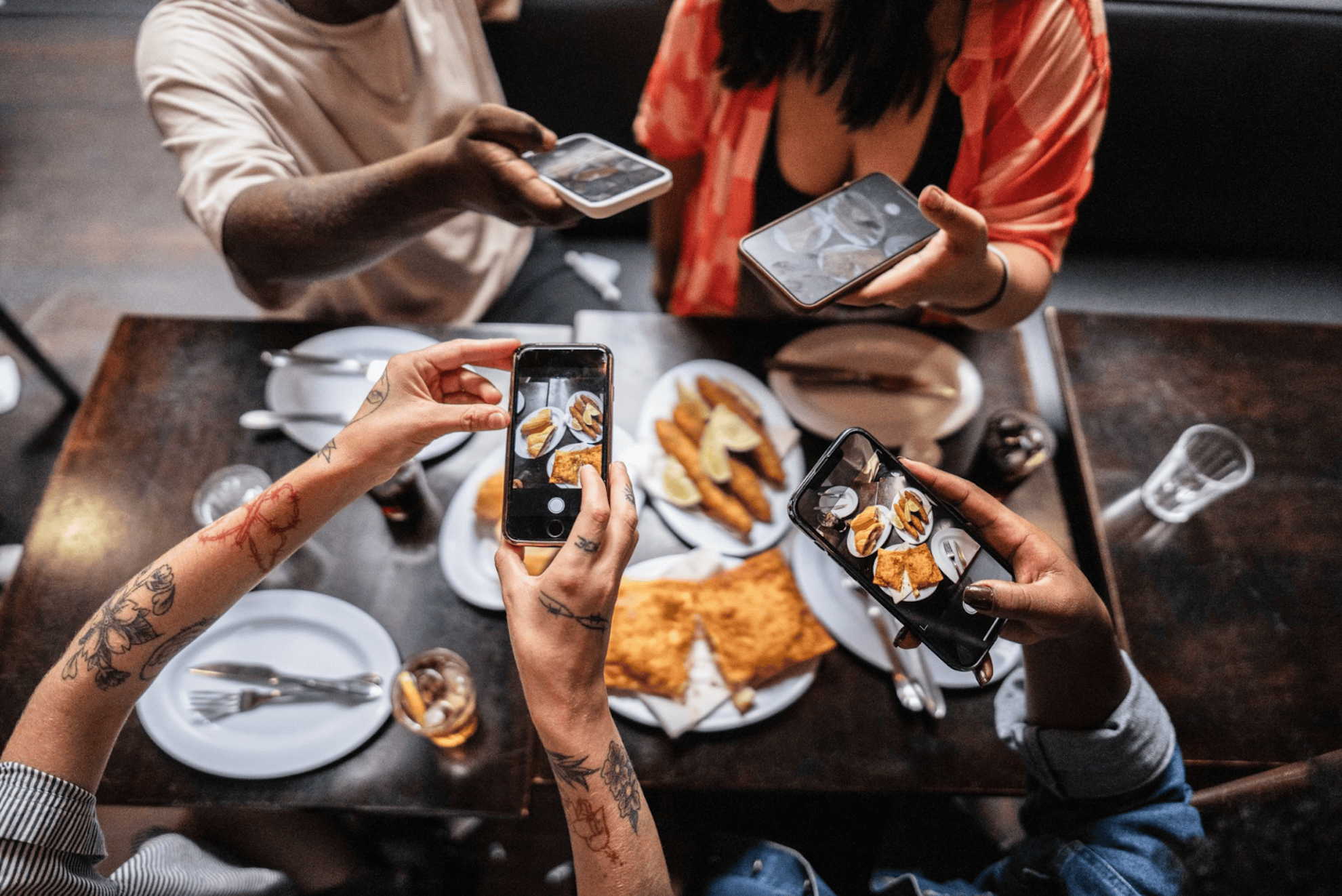
Restaurant social media marketing has one enormous advantage over most other categories, which is that food looks good on camera. The trick is using it well, because posting a beautifully plated entrée three times a week is not a strategy on its own.
The strongest restaurant content creates personality and participation. Show the chef preparing a signature dish, introduce the bartender behind a seasonal cocktail, film the rush before dinner service, share customer reactions or explain where an ingredient comes from. Most of all, make the restaurant feel like a place people want to be, not just a place that sells food. Arizona restaurants also have a built-in content calendar. Spring Training, patio season, college sports, holidays, local festivals and summer survival all create timely restaurant promotion ideas. A national chain might run the same campaign in 30 states, but you can make yours feel like it belongs here.
Winning a first visit is good. Winning the next five is where loyalty starts to compound, and that is where loyalty programs, SMS and email marketing do their real work. According to the National Restaurant Association, 70% of operators with loyalty programs said those programs helped increase customer traffic, and 78% of customers say they are more likely to visit a restaurant where they can earn points even when it is less convenient.
That is a meaningful edge for an independent restaurant competing with chains that run sophisticated apps and rewards platforms. Your program does not need to be complicated. Offer points, birthday rewards, member-only menu drops or the occasional surprise, then pair it with email or text messages that promote events, seasonal items and slower-day offers. Just resist the urge to turn every message into “20% OFF TODAY.” Loyalty comes from feeling recognized, not from being constantly discounted.
People can eat at home, so they come to restaurants for something more. National Restaurant Association research found that 70% of consumers are interested in tasting events, 52% in private dinners with a chef and 50% in cooking classes at a restaurant. That creates an opportunity that independent restaurants are especially well positioned to use.
Think chef collaboration dinners, local brewery pairings, live music nights, community fundraisers, seasonal tasting menus and limited-release dishes. These are more than restaurant advertising ideas. They give customers something to talk about and give your marketing something worth promoting. That word-of-mouth effect is especially valuable for restaurant marketing on a budget because your customers become part of your distribution.
Local personality matters, but convenience still decides plenty of dinners. The National Restaurant Association reports that nearly 75% of restaurant traffic now happens off-premises, and its 2025 research found customers place real value on speed, easy ordering, deals and loyalty benefits when choosing takeout, delivery and drive-thru. That means digital marketing for restaurants has to connect to the actual customer experience.
If your social ad promotes online ordering but the ordering page barely works on mobile, marketing is no longer the problem. If Google says you close at 9 but the kitchen stops taking orders at 8:30, that is part of your marketing, too. Make ordering easy, keep information accurate and make offers clear. Every bit of friction is another chance for a customer to open a national chain’s app instead.
Competing with chain restaurants does not require pretending to be one, and that is usually the wrong move. Independent Arizona restaurants win by leaning into what national competitors have trouble scaling: neighborhood relationships, local culture, distinctive food, genuine personality and memorable experiences. Combine that with smart local restaurant advertising, strong SEO, social content, loyalty marketing and a seamless digital experience, and you have something more valuable than a giant media budget.
That is how we think Challenger Brands should compete. Do not play the biggest brand’s game with fewer resources. Build a smarter game around the advantages you already have. For Arizona restaurants, local is not a limitation. It is the strategy.


